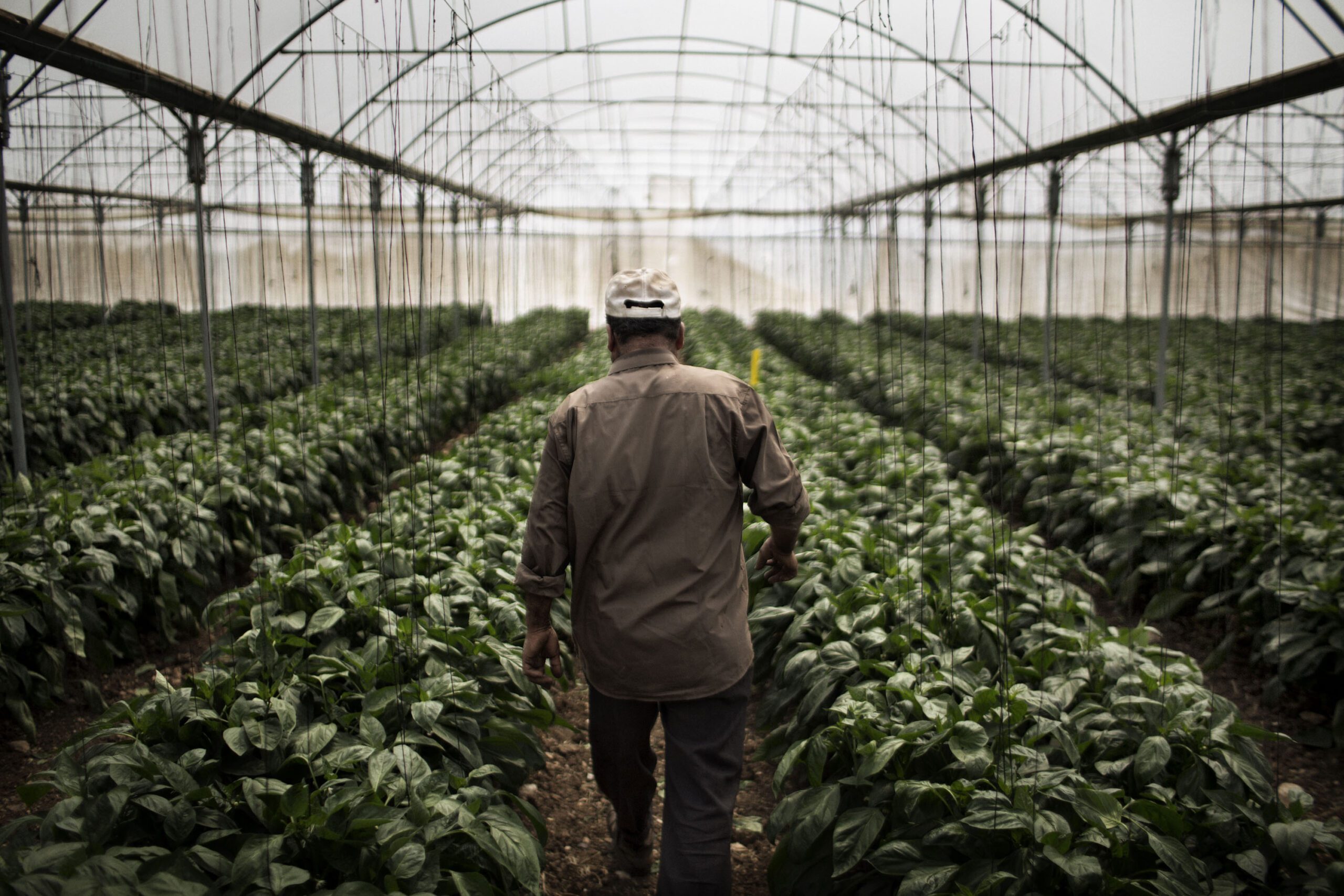
© FAO Pedro Costa Gomez
PROJECT
INFORMATION
Geography
Focus Areas
Contact
Dmytro Prykhodko, Senior Economist
Keywords

© FAO Pedro Costa Gomez
Geography
Focus Areas
Contact
Dmytro Prykhodko, Senior Economist
Keywords
As digital innovations bring new opportunities for countries to trade safely and efficiently across international borders, the EBRD and FAO are providing the support they need to leave the paper trail behind, focusing on the introduction of e-phyto certificates.
The digital revolution offers new opportunities to increase the efficiency, transparency and accessibility of international trade, including for plants and plant products. As well as saving time and costs, digital innovations can reduce trade risks, for example, by promoting the adoption of standardized processes and standards, and enabling traceability at each step of the agrifood chain. Building on previous work carried out in Egypt, Ukraine, and other countries in reviewing the costs and benefits of digital agriculture, the EBRD and FAO carried out assessments to help countries make the digital transition to facilitate trade and reduce trade costs, including the move from paper to e-phytosanitary certificates. In 2023, the estimated value of all plants and plant product exports from countries that use e-Phyto was approximately USD 90 billion, so the potential for gains are substantial.
This project focuses on assessing the costs, benefits and systems to make this shift, with a particular focus on the adoption of e-Phyto – a global digital certificate exchange system designed to make the movement of goods across international borders quicker, safer and cheaper. E-Phyto was developed by the International Plant Protection Convention (IPCC).
Carry out a status assessment of digital trade systems for agricultural products, primarily those of plant origin, identifying issues and bottlenecks in major exporting and importing countries in the EBRD region and making recommendations on how to overcome them.
Assess the readiness and implementation status of e-Phyto in at least three countries and assess options, benefits and challenges of its integration with various digital trade and document exchange platforms.
Assess costs and benefits related to the operation of digital trade solutions, through case studies, surveys and other tools, for example, through engagement with industry representatives, large exporting and importing companies, and countries currently using e-Phyto to assess its impacts on trade efficiency. This includes developing a methodological framework for carrying out a cost-benefit analysis of digital tools.
Identify areas of private and public investment to facilitate digital trade platforms and transformation including through collaboration with the IPPC Global Alliance for Trade Facilitation and the e-Phyto Industry Advisory Group which includes among others the International Grain Trade Coalition, the International Seed Federation, the European Seed Association, the International Cotton Advisory Committee and the Global Express Association. Cooperation with the private sector is key to advancing trade digitalization tools.
The publication Investing in trade digitalization: The case of ePhyto, which presents findings of work carried out under the project, was finalized and launched at the IPPC 19th session of the Commission on Phytosanitary Measures (CPM-19) – March 2025. It was further presented at an OECD-EBRD-FAO webinar in May 2025. As of January 2026, further dissemination efforts are ongoing to continue the dialogue on trade digitalization.
The publication presents the economic impact of the ePhyto Solution from three different angles:
First, the analysis assessed the use of ePhyto by adopting countries based on a survey conducted with National and Regional Plant Protection Organizations (NPPOs). The results of the survey highlighted progress in ePhyto adoption and its growing importance. The extent of coverage of trade by ePhyto-using countries increased from 2 percent in December 2019 to 6 percent in March 2020, driven by the Covid-19 pandemic, and further increased to 17 percent by September 2023 as more countries adopted ePhyto solution.
Second, cost benefit analyses allowed to assess the economic gains from the ePhyto Solution in four countries: Serbia, Egypt, Uzbekistan and Ukraine. This country-specific approach highlighted how ePhytos can reduce trade costs for companies, administrations and society. Exporters in particular stand to gain, with potential savings per export volume associated to a phytosanitary certificate ranging from USD 4.5 in Serbia to USD 83.5 in Egypt with long-term benefits of the ePhyto investment indicating potential returns from USD 43 million to USD 76 million for Ukraine and from USD 27 million to USD 71 million for Egypt, reflecting both countries’ high export volumes and potential savings.
Third, an econometric analysis of ePhyto between trading partners confirmed that its adoption has a positive impact on bilateral trade for the countries that use the system. The results of the analysis revealed that exports start increasing after an exchange of 57 ePhytos per year with trade in perishable products, like fruit and vegetables, benefiting the most from the solution.
In parallel, the project also provided some technical assistance to support ePhyto adoption in Ukraine. More specifically, a plant protection expert supported the implementation of the e-Phyto system in collaboration with the State Service of Ukraine for Food Safety and Consumer Protection (SSUFSCP). This included technical support to the SSUFSCP for the introduction of ePhyto to the national system of phytosanitary certification, identifying capacity-building needs and facilitating the pilot exchange of electronic phytosanitary certificates between Ukraine and Uzbekistan. Ukraine is now exchanging with ePhyto.