ACES: Sustainable grains and oilseeds

Summary

Under the ACES initiative, FAO and the EBRD are working to deepen understanding of the key environmental and climate challenges facing the global grains and oilseeds value chain, and to use these insights to help private sector companies, including current and prospective EBRD clients, identify key sustainability risks and opportunities and strengthen their approach to addressing them.

Building on this global analysis, this ACES activity is also implemented at the country level in Ukraine and Serbia, to test and demonstrate Monitoring, Reporting and Verification (MRV) approaches for sustainable grains and oilseeds farming. Using remote sensing tools, the FAO team will assess how specific good agricultural practices, such as minimum tillage, no-till and cover cropping, can be systematically monitored at scale, with a view to linking verified sustainable practices to green finance opportunities.

CONTEXT

While the global agrifood system as a whole is under growing pressure to reduce its environmental footprint and strengthen climate resilience, each value chain faces distinct sustainability challenges that require tailored responses. The EBRD aims to have a strong understanding of the key environmental sustainability issues, trends and initiatives shaping all value chains in which the Bank invests – or is likely to invest – including grains and oilseeds.

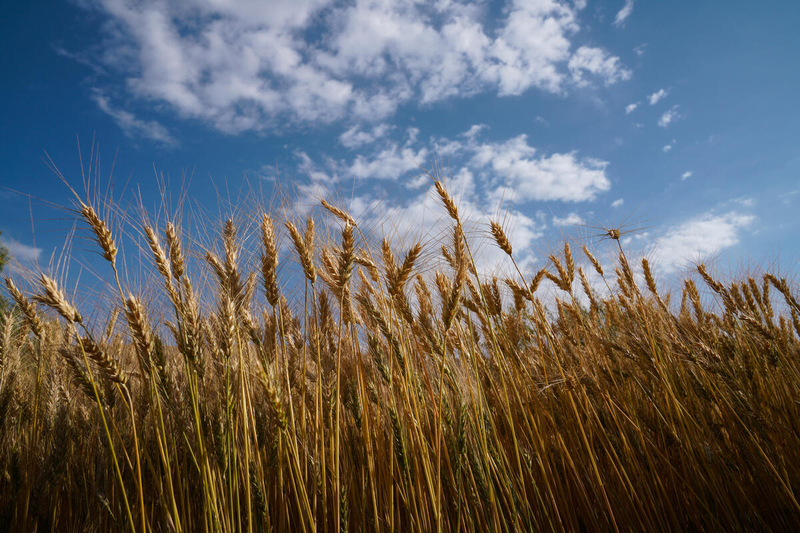
The grains and oilseeds value chain is a particularly important component of the EBRD’s portfolio and faces a range of significant environmental and climate-related challenges. These include high greenhouse gas emissions from production and processing, soil degradation linked to intensive tillage practices, biodiversity loss, unsustainable water use, and heavy reliance on synthetic inputs such as fertilizers and plant protection products. At the same time, the sector offers substantial opportunities to reduce its environmental footprint through the adoption of improved agronomic practices, precision agriculture and digital technologies. Benchmarking GHG performance, identifying scalable and investment-ready solutions, and mapping climate and environmental risk hotspots across EBRD countries of operation are therefore essential to supporting private-sector action and accelerating the transition to more sustainable production systems.

Among EBRD’s countries of operation, Ukraine and Serbia are important players in the global and regional grains markets, with wheat, maize and oilseeds among their main agricultural exports. Both countries are facing increasing sustainability challenges in grain production, including soil degradation and biodiversity loss, which can be addressed through the adoption of improved farming practices. Although uptake of these practices is growing, monitoring, verifying and reporting their implementation at scale remains difficult due to the size, diversity and complexity of farming operations.

Remote sensing technologies offer a promising solution by enabling cost-effective, large-scale and near real-time monitoring of crop development, land use and environmental conditions. International initiatives such as NASA Harvest have already partnered with MRV platforms to monitor farming practices and fertilizer use – two of the main drivers of emissions in crop production. Advancing MRV approaches for good agricultural practices in the grains and oilseeds sector, and exploring how verified sustainable practices can be linked to green finance, is an important strategic priority for the EBRD.

Activities

At the global level, activities focus on analyzing and addressing environmental and climate challenges in the grains and oilseeds value chain through research, stakeholder engagement, knowledge sharing, risk mapping, and the development of practical guidance and tools for private-sector companies and EBRD clients. These activities include:

  • Identify the key environmental and climate issues across nine agrifood value chains, with a focus on grains and oilseeds, including GHG intensity, new technologies and practices, benchmarks and constraints.
  • Prepare analysis and recommendations to inform private-sector companies and EBRD clients about the key environmental issues affecting the grain and oilseeds value chain and how they are addressed by relevant stakeholders.
  • Analyze Greenhouse Gas (GHG) intensity, identifying new technologies and best practices, benchmarking performance across countries, and mapping climate and environmental risk hotspots across EBRD regions.
  • Prepare two briefs and two PowerPoint presentations on grains and oilseeds, focusing on GHG intensity, new technologies, benchmarks and identification of constraints.
  • Organize dialogues with value chain players from EBRD countries of operation to discuss environmental challenges in the grains and oilseeds sector, share experiences and advise on best practices.
  • Organize a knowledge exchange visit for grain industry associations, with a focus on agronomic aspects, technology and digitalization for reduced emission intensity, and industry sustainability practices and benchmarks across countries.
  • Map climate and environmental risk hotspots for grains and oilseeds across EBRD regions, covering climate change impacts on yields and water availability, and environmental impact assessment, including unsustainable water use, soil degradation, reliance on problematic plant-protection products and deforestation risks.
  • Prepare an e-handbook on grains and oilseeds to allow private-sector companies and clients to access key value chain information (economic, technical and environmental).

In Ukraine and Serbia, activities focus on evaluating and promoting the use of remote sensing and data-sharing approaches for monitoring, reporting and verifying sustainable crop farming practices, while engaging stakeholders to support evidence-based sustainability monitoring and link verified practices to green finance opportunities. These activities include:

  • Identify options for MRV of sustainable farming technologies using remote sensing tools in collaboration with industry and academia, including discussing the availability of ground-truthing and company data for specific farming practices.
  • Discuss methodological approaches and potential protocols for data exchange between companies and remote sensing specialists.
  • Review the results of georeferenced remote sensing analysis of specific farming technologies and compare with company data to determine applicability for large-scale crop farming sustainability monitoring.
  • Discuss discrepancies, errors and potential costs associated with MRV options.
  • Hold a round-table discussion in each country (Ukraine and Serbia) with industry, government and other stakeholders, raising awareness of good agricultural practices and their positive impacts on soil health, biodiversity and carbon emissions.
  • Draft a briefing note summarizing options for using remote sensing in MRV of crop farming sustainability claims, alone or in combination with other approaches, with a focus on EBRD financing of primary crop farming in Ukraine.

Hold a final round-table discussion with industry, government and other stakeholders on findings from Ukraine and Serbia, exploring how verified agricultural practices can be linked to green finance, with the involvement of financiers and/or service providers.


RECENT PROJECTS

Scroll to Top

PROJECTS

ACES: Sustainable grains and oilseeds

ACES: Environmental sustainability in the olive oil sector

Enhancing market diversification for traditional product value chains in Tunisia, Jordan and Morocco

ACES: an Agrifood Climate and Environmental Sustainability initiative

AgriAcademy: digital learning, knowledge transfer and business matching in Ukraine’s agribusiness sector

Regional: Scoping agrifood value chain investments in Western sub-Saharan Africa

ACES: Urban logistics and reduction of Food Loss and Waste (FLW)

ACES: Innovation E-Dialogue Series

Protecting and promoting the reputation of Türkiye’s Bursa black fig and peach

Developing NDC roadmaps for climate-smart agrifood systems

Mongolia: Strengthening climate resilience in dairy farming

Greening Kyrgyzstan’s economy: Know more, act better, enhance results

Facilitating agrifood investment in the energy-water-land nexus in Central Asia

Reforming Tunisia’s grain sector to enhance supply chain resilience

Adding a splash of value to Tunisian olive oil

Containing the risks of African swine fever in south-eastern Europe

Defining the path towards climate-efficient agrifood system infrastructure

Filling food security gaps in SEMED supply pipelines

A more resilient food secure future in the SEMED region

Reducing risks in SEMED food security supply chains

Improving traditional livelihoods with modern technology in Kazakhstan

Morocco olive oil production steps up to the plate

Carbon Neutrality: Utopia or The New Green Wave?

A Digital Transition to Safer Food Systems through e-phyto certificates

Putting Georgia’s Traditional Foods on the Culinary Roadmap

A Fresh Approach to Diversifying Agrifood Exports in the Western Balkans

Raising the Stakes for Quality Standards in Montenegro and Serbia

Diversifying Markets for Eastern European and Central Asian Horticulture

Building Back Shorter in Value Chains

Green Horticulture in a Digital Climate

A Taste for Quality Tea in Azerbaijan and Georgia

Linking youth innovation to value chain aggregators in the agrifood sector

The Resilience Pathway: Evolution of Food Distribution Systems during COVID-19

Putting Agricultural Resilience into Serbia’s Irrigation Pipelines

Reimagining the Future of Food for the Cities

Developing a Taste for West Bank and Gaza Olive Oil

Supporting Jordan’s Olive Oil Sector to be Resilient, Competitive and Profitable

Investing in Food Loss and Waste: What’s in it for Development Banks?

Strengthening Moroccan agrifood exporters’ sustainability and competitiveness on global high value markets

Jordan’s Traditional Foods Added to the Development Menu

Creating a Buzz for Türkiye’s Pine Honey

Serving up Egypt’s fruits and vegetables to the international markets

A Public-private Recipe for More Efficient Wheat Imports in Egypt

Agtivate
Privacy Overview

This website uses cookies so that we can provide you with the best user experience possible. Cookie information is stored in your browser and performs functions such as recognising you when you return to our website and helping our team to understand which sections of the website you find most interesting and useful.