
Green

Expansion of Amman’s Green City Action Plan to food logistics and urban greening

project summary This project supports the update of Amman’s Green City Action Plan (GCAP) by pursuing two objectives: (i) integrating sustainable urban food logistics into city planning, and (ii) expanding urban green cover to reduce urban heat island effects and strengthen climate resilience. To achieve these objectives, the project will identify priority policy and investment actions, with a particular focus on Amman’s central market as a strategic food hub. It will assess opportunities to improve food system efficiency and resilience,

Read More »

ACES: Reducing Greenhouse Gas (GHG) emissions

Under the ACES initiative, FAO and the EBRD are pursuing an integrated approach to help reduce GHG emissions in the agrifood sector by (i) translating Nationally Determined Contributions (NDC) commitments into investment-ready roadmaps that identify priority mitigation and resilience opportunities, (ii) developing robust insetting frameworks to enable credible accounting, certification and reduction of supply-chain emissions across agribusiness value chains, and (iii) unlocking carbon market mechanisms to monetize verified emission reductions and mobilize investment for scalable decarbonization through carbon credit generation and trading.

Read More »

ACES: Sustainable livestock

Under the ACES initiative, the EBRD and FAO will support private livestock companies with the information and tools required to tackle environmental and climate issues.
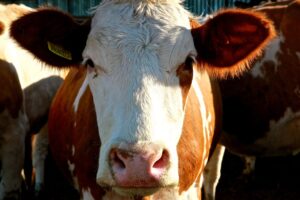
At the country level in Türkiye, the project aims to generate evidence of how improved practices can reduce greenhouse gas emissions and emission intensity in cow milk production. It also seeks to strengthen the capacity of national industry platforms and institutions to lead the sector toward a low-emission, climate-resilient future.

Read More »

Investing in climate-efficient agrifood systems infrastructure

Under this project, the EBRD and FAO aim to support the identification of investment opportunities in climate-efficient agrifood systems infrastructure for selected value chains in Uzbekistan and along the Danube corridor, guiding agribusinesses operating in specific value chains, as well as other investors, in decisions they make related to climate-efficient infrastructure.

Read More »

ACES: Sustainable grains and oilseeds

Under the ACES initiative, FAO and the EBRD are working to deepen understanding of the key environmental and climate challenges facing the global grains and oilseeds value chain, and to use these insights to help private sector companies, including current and prospective EBRD clients, identify key sustainability risks and opportunities and strengthen their approach to addressing them.

Read More »

ACES: Environmental sustainability in the olive oil sector

Under the ACES initiative, the EBRD and FAO will be working with olive oil sector stakeholders in the Mediterranean region to develop a comprehensive overview of environmental challenges along the entire value chain, from production to distribution. They will also examine available management technologies and management approaches available, with a focus on their technical and economic performance, as well as the barriers to their adoption in the SEMED context.

Read More »

ACES: Innovation E-Dialogue Series

The EBRD-FAO Agrifood Sustainability and Innovation E-Dialogue Series, part of the ACES programme, promotes greener, resilient agrifood systems through innovation, investment and partnerships. It fosters dialogue on emerging technologies, sustainable value chains and financing models to scale climate-smart solutions. The series connects diverse stakeholders – investors, researchers, technology developers and policymakers – to advance innovations that reduce emissions, enhance resource efficiency and strengthen climate resilience of agrifood systems.

Read More »
Scroll to Top
Agtivate
Privacy Overview

This website uses cookies so that we can provide you with the best user experience possible. Cookie information is stored in your browser and performs functions such as recognising you when you return to our website and helping our team to understand which sections of the website you find most interesting and useful.