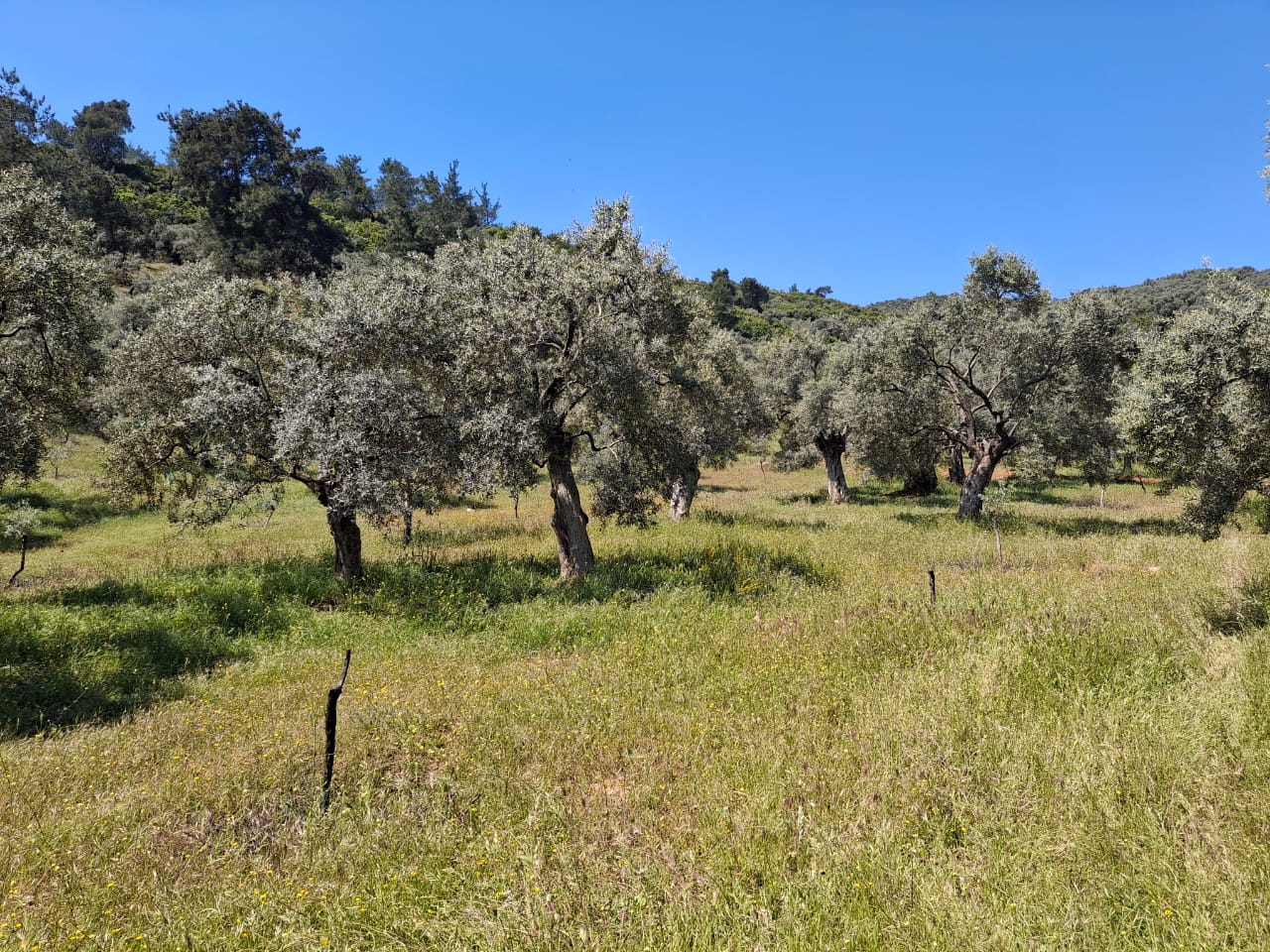
As the world’s second-largest olive oil producer, Türkiye sits at the crossroads of traditional production methods and rising international demand for advanced sustainable production, accounting for around 11.4 percent of global olive oil production (2020–2025 average, International Olive Council).
The olive oil sector has undergone a structural shift, with olive tree numbers doubling since the early 2000s to now over 170 million. While a significant portion of olive oil is consumed domestically (averaging 170 000 tonnes annually), Türkiye is also emerging as a major global exporter. Growing environmental challenges are making sustainability an ever more important priority. To address these challenges, the EBRD and FAO are working together to support the sector’s transition toward more sustainable and resilient practices.
As part of these efforts, a joint visit to İzmir in May 2026 marked a key milestone – the launch of Türkiye’s olive oil sector component under the Agrifood Climate and Environmental Sustainability (ACES) initiative. The ACES initiative, jointly launched by the EBRD and FAO in 2024, aims to support the development of sustainable, resilient agrifood systems through innovative, low-carbon, climate-resilient solutions.
The İzmir visit convened stakeholders from across the value chain, including smallholder producers, cooperatives, service providers and leading companies such as Bunge, Kristal and Verde, to strengthen collaboration and advance the sector’s sustainability agenda.
Turning sustainability challenges into opportunities
During the week, a full-day workshop was organized in partnership with the İzmir Commodity Exchange, bringing together participants from across the olive oil value chain for an open and forward-looking dialogue on the sector’s environmental sustainability challenges and emerging opportunities. The workshop was attended by a diverse group, including representatives from the İzmir Provincial Directorate of the Ministry of Agriculture and Forestry, the Aegean Exporters’ Union, the Aegean Olive and Olive Oil Exporters’ Association, research institutions, olive producers, mill operators and machinery producers, packagers and packaging producers, exporters, laboratories, agri-advisors, extension agents, and pomace processors. Across the various discussions, one message stood out strongly: achieving environmental sustainability will require coordinated action and shared commitment at every level of the sector.
Throughout the week, discussions with stakeholders highlighted a number of critical constraints facing the sector. While climate stress is increasingly impacting yields, ageing orchards, limited adoption of agro-ecological practices and low levels of mechanization continue to constrain productivity and slow the transition to greener production systems. At the same time, national stakeholders emphasized significant untapped potential, particularly in circular economy solutions such as the valorization of olive by-products. For example, each hectare of olive groves generates around 5.7 tonnes of pruning biomass every year, much of which is currently burned or left unused instead of being transformed into useful products or chipped and composted. Furthermore, waste from olive oil production, such as wet pomace, can already generate around USD 50 per tonne when properly processed. This demonstrates that there are viable business opportunities in recovering value from by-products, although investment gaps and regulatory barriers remain key challenges to scaling these opportunities.
Evolving international sustainability standards are reshaping global market dynamics – while they introduce new compliance requirements, they also create pathways to higher-value markets. Participants expressed a clear ambition to move beyond a purely commodity-based model toward one defined by quality, environmental performance and stronger data-driven practices.
Additional activities supporting the sustainability of Türkiye’s olive oil sector are being carried out by FAO with the Turkish Ministry of Trade, under the “Greening the olive oil supply chain: Advancing EU green deal compliance and agrifood transformation” Technical Cooperation Programme, which targets over 40 000 actors across the value chain and over 300 sector stakeholders.
What next?
Insights gathered throughout the visit will directly inform an olive oil sector investment roadmap for Türkiye, shaping the design of future investments and targeted interventions. Collectively, these interventions represent an important step toward a more sustainable, resilient and competitive olive oil sector in Türkiye, better positioned to respond to environmental pressures while meeting evolving global market demands, bringing Turkish olive oil to tables around the world.
***
Want to know more?
The EBRD and FAO have supported the olive oil sector in the SEMED region since 2016. For examples of that work, see this project that supported Tunisian small and medium olive oil producers to access high-quality export markets, and this one that aimed to boost Morocco’s olive oil industry through improved quality and efficiency along the value chain. For more information on the project supporting this activity, see here. For presentations and further documentation on the topic, see here.