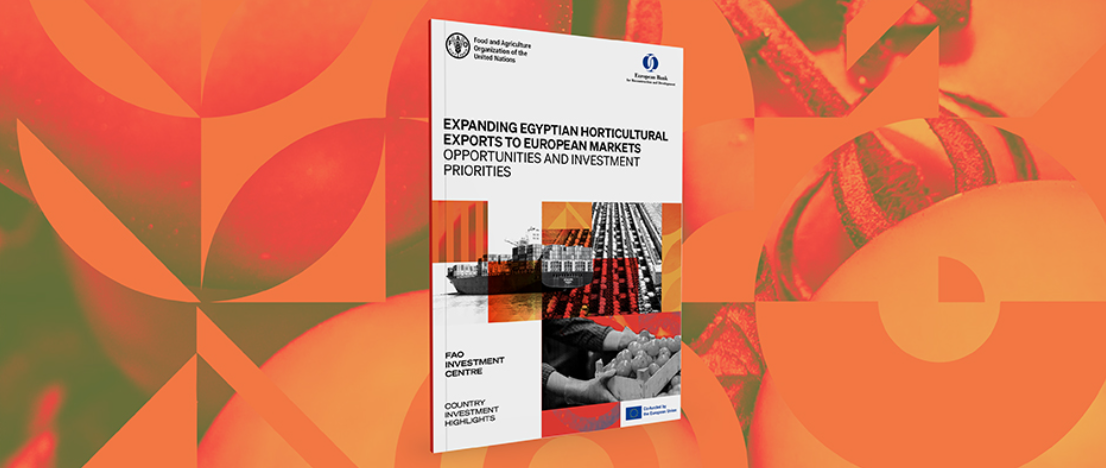
Egypt’s horticulture sector is at a pivotal moment as it prepares to take up new opportunities in high-value markets. A recent report from the European Bank for Reconstruction and Development (EBRD) and the Food and Agriculture Organization of the United Nations (FAO) Investment Centre, with support from the European Union through EBRD’s Trade and Competitiveness Programme, highlights how targeted investments and smarter supply chains can unlock this potential.
The study underscores a compelling prospect: with the right strategic actions, Egyptian horticultural exports could rise by up to 50 percent to Europe and 60 percent globally, according to International Trade Centre estimates. Achieving this growth, however, depends on strengthening key elements of the value chain.
Improving food safety compliance, quality standards and cold chain infrastructure will be essential for meeting Europe’s market requirements. At the same time, Egypt must accelerate the adoption of sustainable farming practices and climate resilient technologies to align with evolving regulations under the EU Green Deal. More efficient supply chain management will further reduce costs, improve product quality and enhance Egypt’s competitiveness.
Beyond technical considerations, this transition offers a broader development opportunity, supporting more inclusive, sustainable value chains that benefit farmers, exporters and consumers alike.
Read the full article here and the report here.
For more information about this EU-supported EBRD-FAO project, see here.